Many homeowners report uneven temperatures, hot spots and rooms that never feel quite right. Ductless systems have become a popular option to address those comfort gaps. With individual indoor units and tight control over temperature in each space, these systems can turn a house with problem rooms into a building with steady, predictable comfort.
This article covers practical ways to get the most out of a ductless setup. You will find clear guidance on sizing and placement, strategies for effective zoning, ways to manage humidity and airflow, maintenance tips to keep performance steady, plus common mistakes to avoid. The goal is to give you usable actions to raise comfort levels without guesswork.
How ductless systems work and why they can improve comfort
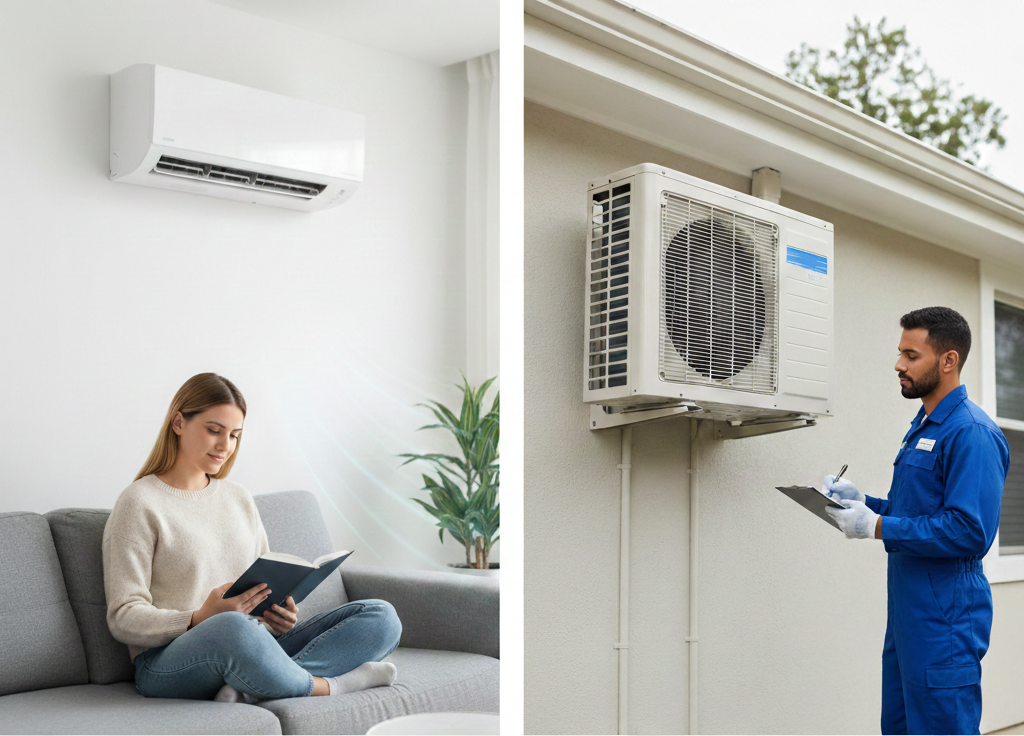
Ductless systems, also called mini splits, combine an outdoor compressor with one or more indoor units. Each indoor unit has its own thermostat and fan settings. That gives you room by room control so you can set different temperatures in bedrooms, living areas and offices.
Two technical points matter for comfort. First, modern compressors use variable speed operation which lets the system modulate output instead of cycling fully on and off. That reduces temperature swings. Second, the refrigeration cycle in heat pump mode both cools and removes moisture. When humidity drops to a comfortable level, perceived temperature will feel lower without running the system harder.
Sizing and placement tips for consistent temperatures
Correct capacity and smart location of indoor units are the foundation of comfort. Oversized units will short cycle which causes uneven temperature and higher humidity. Undersized units will run continuously and struggle to reach set points. A heat load calculation based on square footage, insulation, window area and occupancy is the right starting point.
Room load basics
A load calculation considers wall and roof insulation, number and quality of windows, orientation to the sun and local climate. Use a certified HVAC contractor or a reliable heat load tool to get numbers. As a rule of thumb a typical living room might need a 9 000 to 12 000 BTU indoor unit while a small bedroom often gets by with a 6 000 BTU unit. Those are starting points and will vary by home.
Indoor unit placement
Place indoor units where air can circulate freely across the space. Avoid corners hidden behind furniture. For cooling you want airflow directed across the primary living area not straight at a wall. For sleeping areas point the airflow toward the foot of the bed rather than the head so sleepers are not blasted by air during the night.
Zoning strategies for multiroom comfort
Zoning makes one of the biggest differences in perceived comfort. Instead of trying to condition the entire house to the same temperature you can create separate zones with different set points. Common zones are bedrooms, main living spaces and home offices. Each indoor head has its own control so occupants can tailor comfort to how rooms are used during the day.
For homes with large open areas consider placing two indoor units rather than one oversized unit. That spreads airflow and reduces the chance of cold or hot pockets. In tight budget cases prioritize the spaces where people spend most time. For a more comprehensive project a mix of single head units and multi zone branch boxes can serve several rooms from one outdoor compressor.
If you are weighing installation choices a local installer can explain layout options and ductless models that match your home. For example one reliable resource offers complete installation services and planning for multiroom setups at ductless zone comfort system so you can get a professional evaluation and an installation plan designed around your home.
Managing humidity and airflow for better comfort
Temperature is only one part of feeling comfortable. Humidity plays a major role. Ductless units remove moisture as they cool. However when units short cycle or are too small for a space they may cool air without removing enough moisture. That leads to rooms that feel clammy despite low thermostat settings.
To control humidity let systems run longer cycles instead of frequently switching off. Variable speed models support this by running at low capacity for extended periods. If indoor humidity remains high consider a standalone dehumidifier for basements or very humid climates. Ceiling fans used with ductless units can improve air mixing and create a comfortable breeze without reducing thermostat settings.
Noise, aesthetic choices and maintenance tips
Noise and appearance matter in living spaces. Most modern indoor units are quiet and unobtrusive. Look for models with noise ratings listed in decibels for the low, medium and high fan speeds. A difference of a few decibels can be noticeable in a quiet bedroom so check specifications before buying.
Maintenance is simple but regular care keeps a system running well. Clean or replace filters monthly or as recommended. Wipe indoor coils and check for visible dust. Keep outdoor units free of leaves and obstructions and clear a path around them for airflow. Schedule a professional inspection once a year to check refrigerant charge and electrical connections.
Cost considerations and expected operating results
Initial equipment and installation cost vary by number of indoor units, model efficiency and labor. A single head system for a small room can be within a modest budget while whole home multi zone systems require a larger investment. Balance upfront cost with operating efficiency when choosing a model.
Efficiency metrics to watch are SEER for cooling and HSPF for heating in heat pump mode. Higher numbers mean the system moves more heat per unit of electricity. Many modern mini splits present SEER ratings from the mid teens up to high twenties. In a mild climate a high efficiency model can pay back the difference through lower monthly electric bills over several years. Check for local utility rebates when replacing an older system since many programs offer incentives for high efficiency installations.
Common mistakes and how to avoid them
Installers and homeowners make predictable errors that reduce comfort. One of the most frequent is wrong sizing. Units placed without a heat load calculation often cause short cycling or failure to reach set points. Another error is poor indoor unit placement behind large pieces of furniture or near sources of heat like large windows.
- Avoid oversizing by asking for a documented load calculation.
- Position units for open airflow and avoid blocking registers with shelves or curtains.
- Do not rely on a single indoor unit for a large open plan area without planning multiple discharge points.
- Keep thermostats or remote sensors away from direct sunlight or appliances that make heat.
Finally, skip DIY refrigerant work. Only licensed technicians should handle charge adjustments. Improper refrigeration levels will reduce comfort and can harm the compressor.
Improving comfort with ductless systems comes down to planning, correct sizing and mindful use. Choose a system with variable capacity if you want gentler temperature swings. Zone the home so rooms are conditioned for real use patterns. Keep units clean and place them where air can move freely. When in doubt get a professional load calculation and an installation plan that matches how you live. With the right setup a ductless system can deliver steady temperatures, lower humidity and a quieter, more flexible way to manage your home environment.
Ready to take the next step toward better home comfort? Start with an assessment of your needs and a heat load calculation. If you have a complex layout or want a multiroom plan, call a licensed installer to review options and provide a written proposal. Proper planning removes guesswork and avoids common pitfalls so you get comfort that lasts. Contact a local professional to schedule an on site evaluation and get a clear estimate for equipment and installation. Moving from uneven temperatures to balanced rooms is within reach when you use the right tools and the right planning.